

For many Muslims in Malaysia, the name International Islamic University Malaysia (IIUM) resonates as a beacon of Islamic knowledge and academic excellence. Within its esteemed halls, a towering figure once shaped a global intellectual movement that continues to impact the lives of Muslims worldwide: Professor Malik Badri. The good professor is often hailed as the “father of modern Islamic psychology”. This article serves as an introduction to his profound contributions, particularly for the Malaysian Muslim community who had the honour of hosting him for a significant part of his illustrious career, and for the wider global Muslim ummah.
A Journey of Intellectual Awakening
Born in Sudan, Dr. Malik Badri’s academic journey took him through the American University of Beirut and the University of Leicester in the UK, where he earned his doctorate focusing on cognitive processes. This exposure to Western psychological theories was transformative, as he began to observe the fundamental differences between these frameworks and an Islamic understanding of human nature. He witnessed many Muslim psychologists uncritically adopting secular Western psychology, a trend that deeply concerned him. He worried about the “ethnocentric, indiscriminate exportation of secular Western psychology” to Muslim countries, fearing it would lead to an identity crisis and overlook the vital spiritual and cultural elements of a Muslim worldview.
The Clarion Call
Dr. Badri’s seminal work, “The Dilemma of Muslim Psychologists,” published in 1979, became a watershed moment in the development of Islamic Psychology. In this influential book, he compellingly critiqued the unquestioning adoption of Western psychological theories in the Muslim world. He argued that these theories often contained elements antagonistic to Islamic perspectives and risked a “colonization of the mind”. He urged Muslim psychologists to avoid the “lizard’s hole” of blindly following secular paradigms and instead develop an authentic Islamic paradigm of psychology grounded in the Quran and Sunnah.
Dr. Badri identified three phases Muslim psychologists might experience:
- Infatuation: Accepting the secular approach without question.
- Reconciliation: Attempting to bridge the gap between Islam and Western theory.
- Emancipation: Realising the fundamental differences and embracing a unique Islamic paradigm.

A Fertile Ground in Malaysia
In 1992, Dr. Badri joined the International Islamic University Malaysia (IIUM). This marked a significant phase in his work as he began developing and teaching courses on Islamic Psychology. Malaysia, with its strong Islamic foundations and growing movement towards the Islamization of knowledge, provided a fertile ground for his ideas to take root. His pedagogy was described as unique and powerful, inspiring students and encouraging them to critically analyse psychological theories against their faith and cultural values. He played a crucial role in fostering enthusiasm for integrating Islam within the discipline of psychology in Malaysia and beyond.
The Legacy of Early Muslim Scholars
Dr. Badri also championed the revival of the contributions of early Muslim scholars to the understanding of the human mind and soul. He highlighted the profound insights of thinkers like Ibn Sina (Avicenna) and Al-Ghazali, who offered valuable perspectives on psychology from an Islamic viewpoint. Notably, he brought to light the ninth-century manuscript of Abu Zayd al-Balkhi, “Sustenance of the Body and Soul,” demonstrating that Muslim scholars were centuries ahead in understanding mental health and even developing concepts similar to modern cognitive behavioural therapy. His partial translation and commentary on this work was a groundbreaking contribution, showcasing the rich intellectual heritage of Islamic psychology.
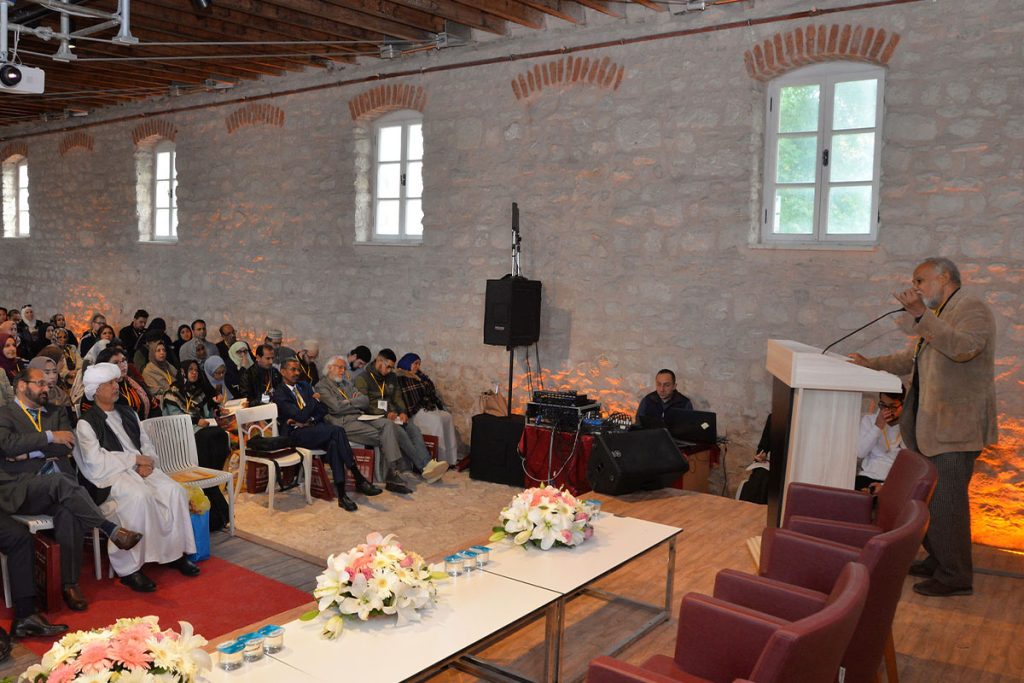
The International Association of Islamic Psychology (IAIP)
In his unwavering commitment to the field, Dr. Malik Badri founded the International Association of Islamic Psychology (IAIP) in 2017. This organisation serves as a vital platform for scholars and practitioners worldwide to connect, exchange ideas, develop culturally informed frameworks, and promote research grounded in Islamic principles. His vision for IAIP was to solidify an Islamic paradigm of psychology based on the Quran and Sunnah, representing what he termed the “phase of emancipation” for Muslim psychologists.
A Lasting Legacy
Dr. Malik Badri’s impact transcends academic circles. He inspired countless students and practitioners to critically evaluate Western psychological theories and develop culturally sensitive and spiritually grounded approaches to mental health. His work has been translated into multiple languages and has influenced the development of counselling centres and programs that recognise the interconnection between spiritual and psychological well-being in Muslim communities around the globe. Even non-Muslim professionals have benefited from his insights into the significance of spiritual aspects in mental health.
For Malaysian Muslims, remembering Dr. Malik Badri is not just about acknowledging a scholar who spent many years in their country. It is about recognising a pioneer who championed an authentic understanding of the human self rooted in Islamic teachings. His legacy encourages us to look inwards through the lens of our faith, to value our rich intellectual heritage, and to strive for a holistic approach to well-being that integrates our spiritual, psychological, and physical dimensions.
Dr. Badri’s work serves as a constant reminder of the wisdom and guidance inherent in Islam for navigating the complexities of the human experience. Let us honour his memory by continuing to explore and develop the profound field of Islamic Psychology for the benefit of ourselves and generations to come.
For those keen to know the basics of Islamic Psychology, read more on nurcounsel.com